
 By omar.elhusainy / April 20, 2026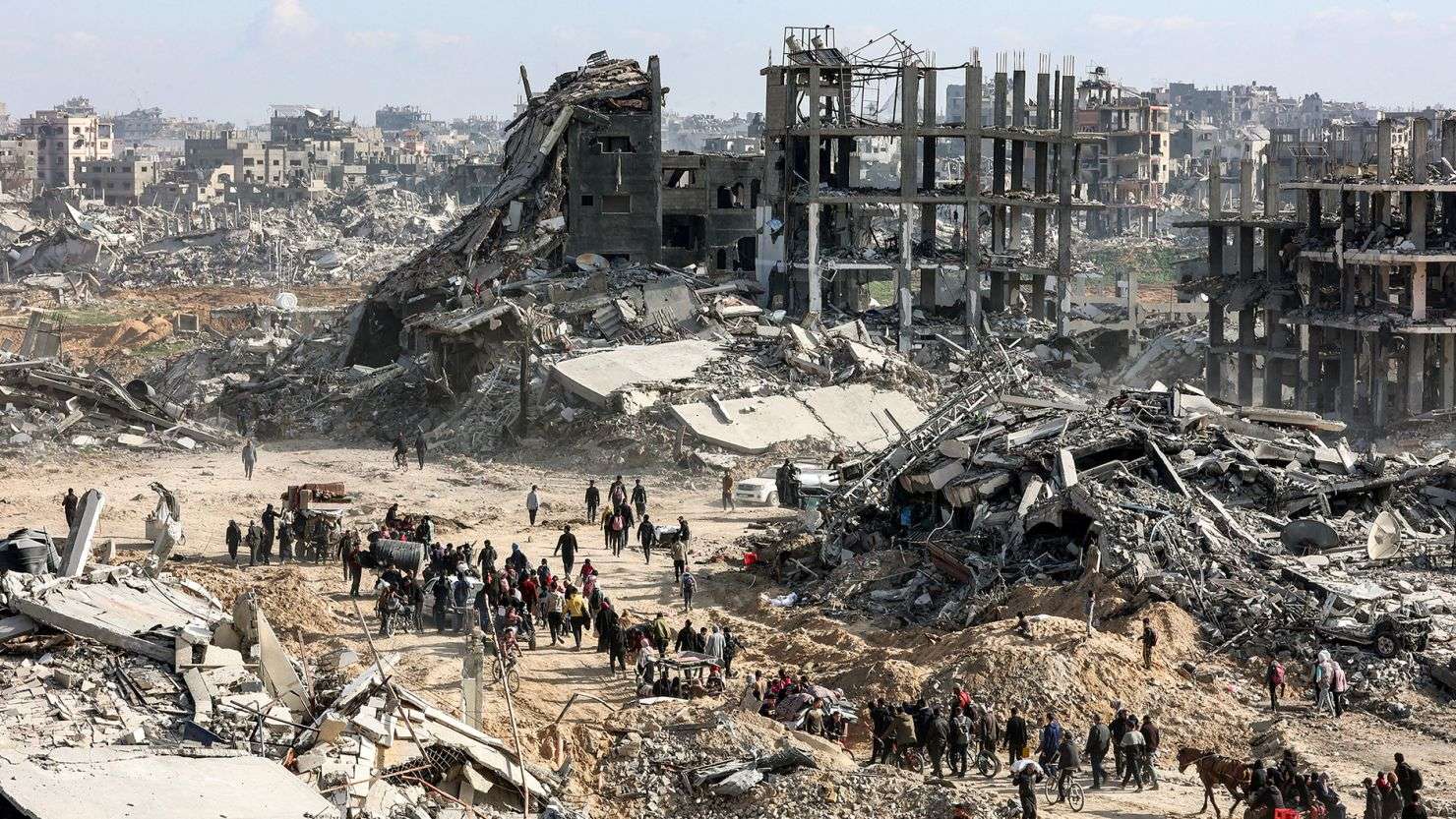
Egypt has long been part of efforts to rebuild Gaza. Before the outbreak of the latest war, attempts were made to build the sector’s infrastructure with a $500 million budget, but the war destroyed those projects. Yet despite the damage inflicted on them, this does not prevent Egypt from contributing once again to rebuilding Gaza by using the Egyptian engineering expertise and capabilities that have developed significantly in recent years.
In the first quarter of 2025, Egypt announced a comprehensive plan to rebuild the Gaza Strip without forcing Palestinians to leave their land. This initiative came amid the difficult circumstances facing Gaza, which have grown even more complex after the Israeli military campaign destroyed many vital facilities in the area.
The plan aimed to provide safe environments and residential areas for Palestinian citizens, alongside the removal of debris and the rehabilitation of infrastructure destroyed by the war. It is worth noting that the Israeli military campaign destroyed nearly a quarter of a million housing units, as well as more than 90% of roads and 80% of health facilities in the Strip, making reconstruction an urgent necessity.
This plan faces several challenges. Some are related to financing, while others concern the logistical difficulties of bringing in equipment and raw materials for reconstruction. This offers an innovative, feasible engineering solution suited to the current circumstances. The solution lies in incorporating building and facility debris into the reconstruction process itself to facilitate the plan and improve its chances of success.
Using Rubble to Rebuild the Gaza Strip
This solution is not unfamiliar in engineering circles. It has international precedent in both research and practice. Egyptian engineers have also recommended it. In February 2025, the Advisory Committee for Gaza Reconstruction at the Egyptian Engineers Syndicate called for focusing on the reuse of debris from destroyed buildings in the construction of new facilities through aggregate recycling.
This is an important economic and environmental step, as rubble resulting from Israeli attacks can be recycled into building materials. This process helps reduce costs, uses already consumed materials, and reduces the need for new construction materials—especially in light of the obstacles and complications imposed by the Israelis on the entry of aid from Egypt into Palestine through the crossing. It also helps accelerate reconstruction, reduce pressure on limited natural resources, and save substantial sums that would otherwise be needed for these components.
The aggregate recycling process includes several stages: collecting the debris, crushing it into smaller materials, and cleaning and sorting it so it is ready for use in building roads and structures.
Moreover, recycling is fundamentally an environmentally friendly idea, which strengthens environmental sustainability in the reconstruction process.
The Aggregate Recycling Process
Construction and demolition waste management is a vital issue that requires serious attention in order to be effectively controlled and managed. Proper management of such waste yields significant benefits because of the diversity of materials it contains, many of which can be recycled and reused. Recycled aggregate can serve as a reliable alternative to natural aggregate in concrete construction. The use of recycled materials derived from construction and demolition waste has shown sufficient promise as components in new concrete.
The reconstruction of Gaza after the enormous destruction caused by the recent war faces many challenges, both humanitarian and engineering. Nevertheless, optimism about the possibility of successful reconstruction stems from the application of innovative and sustainable solutions. In this context, the Egyptian Engineers Syndicate announced the formation of an advisory committee to conduct an extensive study on recycling aggregate for Gaza’s reconstruction, which is considered a highly positive step from both engineering and environmental perspectives.
Aggregate recycling is an environmentally friendly step that effectively reduces waste and minimizes the environmental impact of building demolition. Contrary to the belief that environmental solutions are always costly or ineffective, many studies have shown that recycling enhances environmental sustainability and is more effective than traditional solutions. This is due to several environmental and engineering reasons, most notably:
* Using recycled aggregate reduces the need to produce new reinforced concrete mixes, thereby lowering carbon emissions during the extraction, manufacture, transport, and use of raw materials at construction sites.
* It accelerates construction work in practical terms.
* Recycling solid waste from destroyed homes, rather than leaving it on roads and polluting the environment, prevents the formation of dust from cement rubble, which directly affects public health.
* It reduces pressure on landfills, limiting negative environmental impacts by reducing pollution from harmful substances leaking from landfills into surrounding environments, such as soil and groundwater.
* It preserves ecological balance. Recycling reduces the destruction of natural elements and the negative effects on biodiversity associated with various construction activities on site, thereby enhancing environmental sustainability. Environmentally unfriendly elements have a major impact on vegetation cover and on insect and animal species in the area.
* Recycling rubble can also save a substantial budget that could be redirected to other aspects of reconstruction or to support other sectors in Gaza.
Global Developments in Aggregate Recycling
Waste generated by the destruction of concrete pavements has been used as recycled aggregate since the end of the Second World War. However, this use is still uncommon in many developing countries. The use of aggregate from recycled construction waste in various concrete applications has not been widely reported over the past decades, but it is now increasing in some regions, especially in developed countries.
In Europe, for example, the demolition of concrete structures generates 850 million tons of waste each year, a concern given the scarcity of landfill sites. Concrete made with recycled aggregate can be the solution to this problem, as it mitigates negative environmental impacts and provides an effective means of disposing of this waste. However, differences in the composition and properties of natural aggregate and recycled concrete aggregate must be taken into account, as they affect quality.
Historically, there have been many successful experiments in aggregate recycling, whether to save costs, reduce carbon emissions, or assist reconstruction after natural disasters or wars.
* The Netherlands is considered one of the leading countries in this field. Demolition rubble is collected by construction companies, sorted, and converted into materials suitable for use in building projects such as roads, tunnels, and buildings. Dutch technologies have advanced to the point that recycled aggregate is now of high quality and has become an effective substitute for raw materials.
* Scotland recycled 89.4% of demolition waste from buildings in 2021. This exceeds the European Union benchmark, which requires the recycling of at least 70% of aggregate and construction-sector waste.
* As for its use in reconstruction, one of the most recent successful experiences began in August 2023, when the United Nations Development Programme (UNDP) and the Government of Japan signed an agreement worth 700 million Japanese yen (equivalent at the time to $4.83 million) to build modern aggregate recycling facilities in Hatay and Kahramanmaraş, two of the provinces hardest hit by the devastating earthquakes that struck Turkey in February. The disaster killed more than 50,700 people and destroyed more than 313,000 buildings, leaving behind massive quantities of shattered concrete slabs and twisted steel.
* These new facilities were the first of their kind in the earthquake-affected area. They safely removed hazardous materials, such as asbestos, from the rubble, separated scrap metals and other recyclable materials, and crushed cement for reuse in road paving.
The Egyptian Role in Reconstruction
Given the development of infrastructure and construction in Egypt, there has been a significant increase in the use of natural aggregate, which is highly beneficial in protecting the environment on the one hand and using economic resources efficiently on the other. It should be noted that the common method of managing this waste is disposal in landfills, which creates a major environmental problem due to accumulation. Other developing countries have addressed this problem by enacting laws that ban or impose special taxes on waste-dumping areas, thereby reducing the amount of construction and demolition waste.
Concrete, bricks, sand, mortar, and tiles are among the heaviest materials in construction and demolition waste in Egypt, with concrete alone accounting for up to half of the total weight. Recycling concrete debris from construction and demolition projects to provide an alternative aggregate for structural concrete is one way to address these problems. Egyptian engineers also have broad experience in this area through previous research and projects. Reconstruction projects, moreover, are not new to Egyptian engineers.
This innovative solution is not the only possible way to reconstruct Gaza. Egyptian efforts have previously exported prefabricated, dismantlable, and reassemblable housing units as an alternative, and these have proven effective in many countries.
The engineering and environmental expertise Egypt has acquired over the past decade constitutes a decisive factor in implementing sustainable reconstruction solutions, in line with Egypt’s strong desire to assist the Palestinians and protect its national security.